Genre Remix:
That 70's Gram!
Genre is defined as “a class or category of artistic endeavor having a particular form, content, technique, or the like” (“Genre”). This definition emphasizes the artistic aspect of a genre that allows for creativity and development. This being said, we have learned that genres have been redeveloped and remixed over time. The process of remixing genres can vary; however, anything developed from prior experience or influence in any way has been remixed. This process may be viewed in both negative and positive ways; however, the fact of the matter is that this remixing cannot be stopped altogether. We have also come to find that genres are standardized ways of relating amongst a group of people. For our genre remix, we have combined the modern social media platform, Instagram, with the past decade of 1970s America. These two genres reflect today’s culture and priorities versus the culture in the 1970s. Our goal is to show the culture, events, and aspects of the seventies in a modern Instagram format.


The history of Instagram has evolved over a short amount of time. With its arrival in October of 2010, it has become extremely popular in just five years (Dashburst). Almost everyone today has a smartphone, making this an easy way of accessing social media. Instagram allows people to share instantly their lives with their “followers” through posting photographs and videos. The more followers you accumulate, the more “popular” and successful you are seen as within this culture. Instagram includes a profile tab, a timeline full of photos and videos of those you follow, a home tab, search tab, and a notification tab. The tone of Instagram is very casual, silly, laid back, and personal. Although the tone and atmosphere of Instagram is laid back, there is still pressure for users to reach a certain amount of likes on photos and followers choosing to view your content. Typical conventions of Instagram include filters, hashtags, captions, locations, likes, bios, and emojis (Dashburst). One reason this social media outlet is so popular is because it allows for even more creativity through the use of these conventions. Individuals can take any picture, place a unique filter on it, come up with a caption, and post it. While this allows for creative freedom, it also creates another large distraction for young adults and teenagers, and can add to the lack of physical communication being made within our current culture.
The 1970’s was a significant and distinct time in American history where war, politics, music, TV shows, and the rebellious mindset of the American people all helped shaped a culture unique to the time. The seventies era is described as a “wonderful celebration of peace following a decade of chaos and turmoil” (The 70’s). Several historical events took place during this era such as the Watergate Scandal, Vietnam War and protesting, Elvis Presley’s death, the Beatles breaking up, Nixon’s presidency and role as a leader, an energy crisis, and so on. Popular conventions of this genre include bellbottom pants, a fierce belief in peace, flower power, anti-war sentiments, platform shoes, tie dye, Happy Days, disco music, lava lamps, and eight-track tape players. In this era, technology and social media weren’t used or thought of. People then weren’t concerned with captions and filters or perfect “selfie lighting”, but instead were enjoying life and dancing to disco music. Even common sayings and slang terms used back in this era were completely different and not as familiar today. People used words such as “rad”, “groovy”, and “gnarly” more freely, whereas today these terms are replaced in today’s vernacular by words such as “swag.” In some ways, the 70s era was viewed as a more peaceful and carefree time, full of individualism and creativity. Overall, the seventies was a period where the culture revolved around how the people expressed themselves in response to their situations during that time.
In our Instagram and 1970’s mashup, we have created a profile with a feed of photographs that each embody different aspects of both of these two different genres. The consistent combination of the two genres that can be seen in all of the uploaded photos is the formatting of Instagram contrasting with either real photos from the 70s or photos depicting 70s common culture. The first picture uploaded shows a group of girls and guys displaying the standard look of the era ("What Did Men…”). Their apparel embodies the hippie, peace, and love trend of the seventies from their headbands, beaded scarf, crimped hair, and floral patterns. The contrasting conventions of Instagram lie in the Instagram filter seen applied to the photograph, the hashtag as a caption, and use of modern slang terms; all things that would not have been used in the 70s.
1970: Apollo 13 returns to Earth, the Beatles break up
1972: 1st time a U.S. president Nixon visits China, Summer Olympic hostage crisis
1971: Gay rights groups begin forming, Disney World opens
1974: fuel shortages sweep the country, Nixon resigns after the Watergate scandal
1973: "The Godfather" sweeps the awards, Chicago's Sears tower was the tallest in the world, pocket calculators available to the mases
1976: America's bicentennial birthday, TV show "Charlie's Angels" debuts, Barbara Walters is the first woman cohost of a major network evening broadcast
1978: 1st test tube baby, 1st non-Italian pope, Harvey Milk assassinated for being openly gay and holding a public office, Sony's Walkman released
1975: Cambodian genocide begins, end of the Vietnam War, "Jaws" is released, SNL debuted
1977: "Star Wars" opens in theaters, Apple computers take off in home, NYC blackout, Elvis dies, Atari is released, "Saturday Night Fever" is released
1979: Worst nuclear accident in U.S. history, Margaret Thatcher's 1st election victory, Mother Teresa wins peace prize
The second photo uploaded shows a group of people protesting (Naison). 1970s culture can be clearly seen in this photo because it is a photo taken during the 70s with lower photo quality, black and white coloring, peace signs being displayed, protesters as the subject, and “love not war” text being made the focus of the photo it successfully portrays 70s culture. Instagram’s influence on the photograph can be seen in the written caption again which contains the use of several emojis and hashtags, two ways to communicate that are unique to today’s time and social media.


The next photo is of a young girl in a dress ("Hippy Go Go…”). The featured woman is posing in attire commonly associated with the 70s with bright colors, tie dye esque patterns, tall boots, and forming a peace sign with her hand all of these things working to incorporate genre conventions of the 1970s. The photo shows the use of white space and features a caption that includes hashtags and emoticons yet again as a means to incorporate modern times but this time with an Instagram-specific movement as well. “#ootd” stands for outfit of the day and has become a common trending tag for people’s personal pictures and fashion bloggers alike to share what people are wearing and create a space for people to explore and be inspired by other's fashion choices through use of the hashtag on Instagram. Another modern genre specific feature used is white space, many people today include white space in their instagram posts to create and unique and cohesive look to their feed.


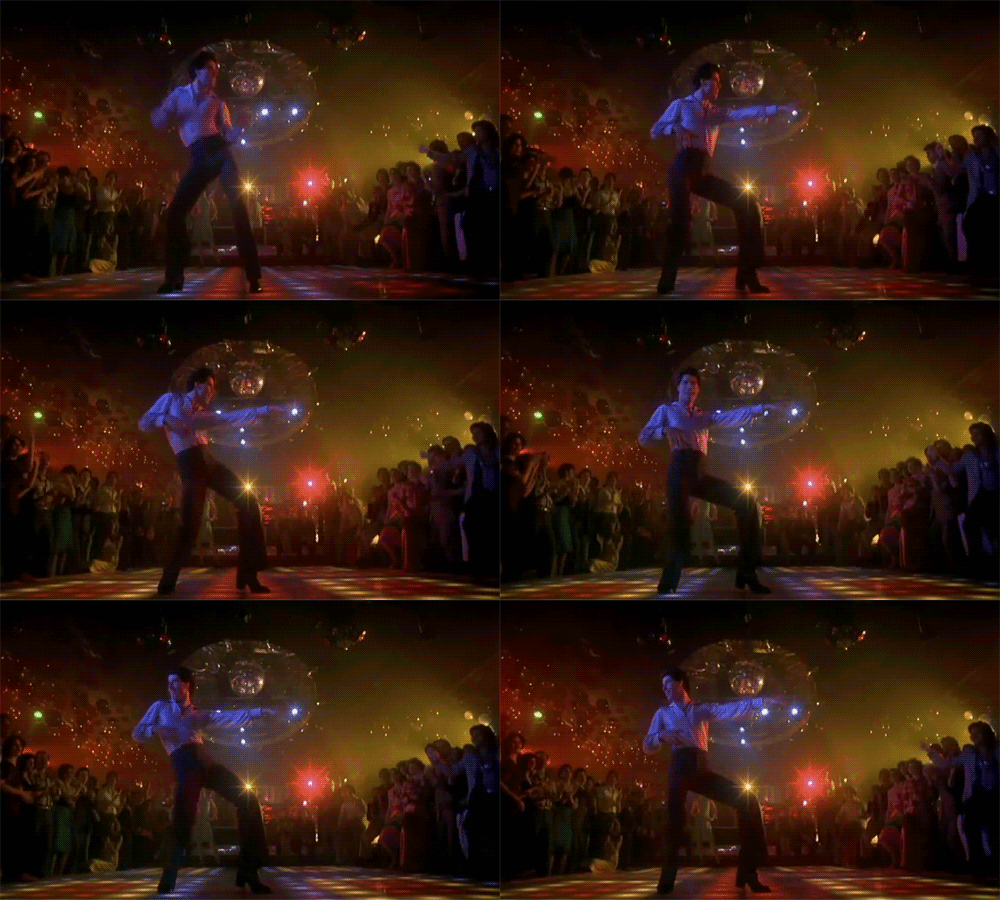
Another example can be seen in the photo posted of John Travolta ("The Seventies…”). Discos were popular events associated with the 1970s that were known for their recognizable venues, dress, music, and dance. John Travolta displays these qualities through the backdrop with a colorful light up dance floor, the noticeable disco ball scattering light, his dramatic monochromatic suit, and theatrical pose with one finger raised in the air commonly associated with disco dancing. Features common to Instagram can be seen through tagging John Travolta’s Instagram profile, the inclusion of a location that connects to the photo, and hashtags used in the caption. By including conventions that are specific to both genres in one single product we created a remix of Instagram and the 1970s.


The use of Instagram as a genre reflecting today’s common culture and incorporating content, culture norms, and history from the 1970s within the feed allowed us to compare and contrast between the two. Similar to how Instagram is being utilized today, we used this account feed as a way to display a timeline of events within this era, along with what was commonly seen and worn. Although the cultures themselves did not share similar priorities and norms, we were able to illustrate what a user in the 1970s would have posted if they had the access to technology and social media like we do today.

Works Cited
DashBurst LLC. "The History of Instagram." The DashBurst Blog. N.p., n.d. Web. 20 Oct. 2015.
"Genre." Dictionary.com. Dictionary.com, LLC. Web. 20 Oct. 2015.
"Hippy Go Go Girl Costume (EF2066)." Hippy Go Go Girl Costume EF2066. Flagship Fancy Dress, n.d. Web. 20 Oct. 2015.
Naison, Mark. "Education Activists." LA Progressive. N.p., 09 Aug. 2013. Web. 20 Oct. 2015.
"The 70s." Classic70s.com. N.p., 2012. Web. 20 Oct. 2015.
"The Seventies - CNN.com." CNN. Cable News Network, n.d. Web. 20 Oct. 2015.
"What Did Men Wear in the 70s?" Ask. N.p., n.d. Web. 20 Oct. 2015.
Authors Note:
During this project I learned what a genre was and how to effectively identify separate genres and create an original remix between the two genres with the help of my partners, Sydney Cline and Breea Hughes. I started with the back ground choosing a pattern and colors reflective of the 1970s popular style in wallpaper and furniture. From there I continued this color scheme of orange and greens throughout my piece. For the heading I used a fun and bold font that would stand out as a title, the font used for the body is fun and retro looking while still being pretty easy to read. I included clipart of the record at the top of the page directly adjacent to the image of the hashtag and instagram to show two separate and specific genre conventions I would be remixing. The timeline provided a brief visual aid to the history given on the 1970s. The instagram screen shots were from the instagram remix page we created for the project giving readers visuals directly beside the text written about them so they do not have to search any further for images. The remaining clip art used was chosen for aesthetics to match the rest of the page and to help break up the text for the reader making a long essay more digitally compatiable.